Welcome!

“You imagine that I look back on my life's work with calm satisfaction, [but] there is not a single concept of which I am convinced that it will stand firm, and I feel uncertain whether I am in general on the right track.”
Albert Einstein

If, like Einstein, you wonder if we are on the right track, you've come to the right place. You won't find many examples of conventional thinking here. Our mission is to make everything new, from science, to religion, to governance, to our ways of doing business, and interacting with others. If you are ready to leave the beaten path, here's the exit ramp.

Recommended Reading

Before exploring the articles offered on this page, please consider reading Thomas Kuhn's The Structure of Scientific Revolutions published by The University of Chicago Press, Chicago 1970 (ISBN 0-226-45804-0). Understanding the emotional and social forces that come into play when accepted theories are challenged may help you to judge these articles with reason rather than with passion or ill-considered attachments to out-dated, defunct, or dangerous agendas.

Disclaimer

We are not going to pretend that what we have to say in any of our writings is the truth--it is one person's job to conceive of things, and another's to judge their worth (see Plato's Theaetetus 149a-151e and Phaedrus 274c-275b). We are seeking the truth, and would love to find it [That's why it's called philo|sophy], but maybe the best we can do is give you a boost so that you can view a wider horizon.

Every apple tree recommends its own apples, the wise inspect and taste before they take a bushel home.

You, then, are the judge. What's your opinion? thumbs up, or thumbs down? Have we made progress beyond the accepted theories? Have we caused you to think of things you hadn't thought of before? Have we confirmed those elusive suspicions you've had all along? Have we managed to say what you've been trying to say all this time?

Like plants and people, ideas need to be fostered and nourished. What good would it do the world if somebody knew the truth and kept it to himself? What good would it do the world if somebody spoke the truth but only when nobody else was listening? What good would it do the world if somebody spoke the truth and nobody paid attention? What good would it do if everyone listened but nobody changed their minds? And what if everyone changed their minds, but nobody changed their ways? We are doing our part, please consider doing yours.
 

Online Articles:

  • Why Did Einstein Think He Was Wrong? by John Newell

  • Discusses ways in which twentieth century physics has abandoned its mission and even its subject matter.
  • Letter to The College, the Alumni Magazine of St. John's College  by John Newell

  • Criticizes hero-worship of Einstein, and shows how relativity theory can be used to 'prove' that the Earth is stationary at the center of the universe. This is the unedited version.
  • A Comedy of Errors or Whose Goose Got Cooked? by John Newell
    In the fall 2005 issue of The College, a peculiar and contentious letter to the editor appeared. This is Newell's reply to that letter. It includes an expansion on the issues covered in the previous two entries. 
    Education: The End of Faith? by John Newell

  • One of the biggest crisis that  religion now faces is the spread of  atheism, and the spread of atheism is traceable to the influence of science. Science, however, leaves much to be desired when it comes to meeting its own criteria for what constitutes a rational system and a description of reality. To take science as one's spiritual guide, when it fails even  to be an adequate natural guide, is a grave mistake. This article, which makes a start on a critique of the influence of science on religion,  was published in The Word Magazine, the official publication of the Antiochian Orthodox Christian Archdiocese of North America. You can find links to the article by following the link above for The Word Magazine (look for vol. 49 #1, January 2005). The article as printed, however, had a few typos, so we are offering this corrected version online. The article is addressed to college students, but it may be of some service to any who are confused about this issue. 
Works Available:
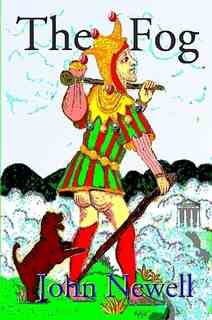
  • NEW! The Fog  by John Newell

  • A modern version of Aristophanes' Clouds. Simon Sempel goes to enroll in the university and ends up either confounding the professors or driving them crazy. In the end, they can't bear to let him enroll and they don't dare to let him go. Their hilarious solution caps this crazy comedy. And the comedy tempers the real criticisms of modern thought that the work contains. View Online Trailer! [225k Trailer is in PowerPoint Format.]
  • MOST POPULAR CHOICE! The Existence Debate of Outis Metis and Himanu El, Volume I: The Void, The Chasm, And The Deep. Deluxe Edition (on CD with animations) as recorded by Ben Abu Theuth

  • Demonstrates how the premises of modern science and the speculations of twentieth century cosmology all lead to the conclusion that the universe does not exist. Contains more than a dozen proofs that ironically demonstrate that the universe does not exist. Also includes intriguing biographical information about Outis Metis.
     
More to Come:
  • The Existence Debate of Outis Metis and Himanu El, Volume II: The Beginning and The Middle
    The second round of the existence debate. This one has a much more positive outcome.
  • The Gymnosophist
    The fun and critiques of The Fog continue in this sequel to the philosophical comedy.
  • Collected works of Perry Fuseos
    Essays that present alternatives to relativity theory and quantum theory.

A Final  Thought

Writing articles such as these involves, to be sure, a certain amount of natural talent. "You'd have a hell of a time," my grandfather once said, "trying to get a fig from a rose bush." But getting fruit, even from the right kind of tree, involves more than having the right kind of nature. "You can't expect big things if all you do is place a tiny mustard seed into an empty petri dish" he'd say.

The dynamic of seed working with soil, climate, water, and light is what gets things going. And sometimes extra help is needed to fend off insects, mold, diseases, competing plants, and self-made problems (such as overgrowth). There's room for you to help out, a role for you to play. Find it, do it, and do it well.